Many children in the targeted districts benefit from CHILDHOPE-ZAMBIA
early childhood care development and education (ECCDE) work
through supporting their physical and emotional development.
CHILDHOPE Initiatives include construction of early childhood
care, development and education centers, establishing day
care centers and pre-schools, stimulating children's learning
through play, pre-school, feeding programmes, community
capacity building and adult literacy classes to improve
their reading and writing skills. CHILDHOPE believes early
childhood programmes make for strong foundations and pay
high dividends which have significant impact on children's
health and readiness to learn brings important economic
returns later in life. CHILDHOPE does not only work with
communities to construct ECCDE centers, it also encourages
and supports ECCDE management and governance. This promotes
awareness of education and creates ownership of structures
by the communities. CHILDHOPE trains mothers in communities
on infant and child nutrition and promotion of food security
at community level. The organisation trains and sensitizes
communities’ pregnant women with education during
pregnancy and supports nutritional needs of pregnant and
lactating mothers. CHILDHOPE also trains early childhood
care and development Caregivers including traditional birth
attendants and provides the centres with cooking and feeding
utensils for the ECCDE centres. The organisation trains
parent Management committees, pre-school teachers including
refresher courses for them. Where ECCDE centers have not
yet been built due to financial constraints, the children
learn from churches and simple structures that have been
built by the communities. In these centers, there is health
and child feeding programmes. In each village/community
where CHILDHOPE is operates, there are village committees
comprising of 10 members each headed by the village chairpersons.
This helps CHILDHOPE activities go on as planned since these
committees are involved in the day to day running of the
activities. There are HIV/AIDS sensitization activities
in each center. These activities target the children, youth
and the parents. The ECCDE centers also work closely with
the nearby basic schools that usually receive the children
to grade one.
Improving performance at school
For instance in Mazabuka, primary school teachers in the
targeted communities have reported that children who enroll
for the first class at primary-level after having attended
CHILDHOPE ECCDE programme perform better academically, socially
and emotionally than their classmates. CHILDHOPE ECCDE programmes
have been most successful where strong relationships among
the communities and the basic school teachers have been
formed. Our basic school improvement work involves child
participation and school governance. In 2009, CHILDHOPE
trained 40 pre-school teachers, 80 community members in
TB Direct observed treatment(DOT) and psychosocial counseling,
120 women in safe motherhood and HIV/AIDS,80 community members
in ECCDE care giving,80 community members in parent management
committees, supported 240 people living with HIV/AIDS through
the provision of Home based care kits. For example in 2009
in Mazabuka district, CHILDHOPE supported 800 children in
ECCDE.
Health
Under health, CHILDHOPE supports pre-school and primary
school children. This school health component of the project
avails common drugs to the children e.g. de-worming drugs,
anti malaria, anti bilharzia, Panadols, aspirin etc. The
CHILDHOPE health programmes help to save thousands of children's
lives every year. Our community-level initiatives also include
immunization, child nutrition and hygiene promotions which
are done hand in hand with the local health centers. Other
health programmes include malaria, reproductive health,
diarrhea, malnutrition prevention among the children with
HIV and AIDS education. CHILDHOPE works with the local health
centers in supporting health for the children
Sexual health and HIV/AIDS
Pregnancies and sexually transmitted diseases (STDs) affect
many children and youths in the rural areas because they
are denied the right to protect themselves. CHILDHOPE awareness-raising
and direct response programmes help to empower children
and young people so that they can realize their rights and
achieve their full potential. CHILDHOPE directly involves
children and young people in all of its work by helping
them to identify problems and find solutions. We work with
partners and communities to:
• Advocate for the rights of children and youths living
in a world with HIV
• Provide prevention, care and support services to
the people living with HIV and AIDS including children.
• Confront beliefs and attitudes that maintain unequal
power relations between the sexes.
• Support quality reproductive and sexual health education
and services
• Provide home-based care kits and train caregivers.
• Strengthen/ form HIV/AIDS school clubs.
• Provide HIV/AIDS adolescent youth awareness and
education program through peer education and moral upbringing
to fight HIV/AIDS in the rural communities. The organization
uses;
o Sport to disseminate information about HIV/AIDS.
These are football, netball and volleyball. Villages compete
with each other and the best teams get prices. This encourages
the communities to do more in HIV/AIDS activities. Other
messages on HIV/AIDS are disseminated as they engage in
sporting activities.
o Drama, poems and songs to disseminate information about
HIV/AIDS. Peer educators have been trained to handle most
of the HIV/AIDS programmes in the communities.
• Provide food and medicines to the
people living with HIV/AIDS. On the provision of medicines
to the people living with HIV/AIDS, CHILDHOPE avails Panadols,
asprin.ORS and procaine penicillin etc. These drugs suppress
other diseases that may affect the bodies of the people
living with HIV/AIDS due to weak anti bodies caused by HIV/AIDS.
• Conduct home visits to the people living with HIV/AIDS
through CHILDHOPE caregivers. The caregivers feed, wash
and clean the homes of the people living with HIV/AIDS that
do not have the energy to do this for themselves as a result
of sickness. The caregivers also help in turning the bodies
and applying medicine to the people living with HIV/AIDS
that have developed sores due to over sleeping on one side.
Nutrition
Nutrition plays an important role in the up-bringing of
children. Many orphans and other vulnerable children suffer
from increased malnutrition and reduced opportunity for
education due to lack of nutrition support. Without adequate
care and support, many children are exposed to exploitative
child labor and abuse and face increased vulnerability to
HIV infection. CHILDHOPE supports the nutrition of the children
through the provision of soya meal, mealie-meal, sugar,
cooking oil, Kapenta, beans and salt. This has encouraged
orphans and other vulnerable children (OVCs) attend school.
CHILDHOPE also teaches the communities on the importance
of nutrition to the children. The organization provides
food and nutritional security to the malnourished children
directly or indirectly affected by HIV/AIDS. This is done
as the immediate nutritional support to the children identified
as acutely malnourished through a monitored supplementary
feeding programme. Communities through the support of CHILDHOPE
has established communal gardens which increase the food
and nutritional security of the malnourished children identified
as stunted.80% of the vegetables in the gardens are consumed
by the children and 20% of the vegetables are being sold
for the continuation of purchase of seed for gardening.
CHILDHOPE educates the communities on the importance of
feeding the children with locally available nutrition foods
to improve their health. CHILDHOPE nutrition support for
the children is also done hand in hand with the local health
centers.
Provision of clean water and sanitation
CHILDHOPE understands that the provision of clean water
and sanitation is critical for the development of a child
therefore; the organization strives to provide clean water
and sanitation to the rural communities in early childhood
care, development and education centres and the basic schools.
The organization works with it partners towards making ECCDE
centers and basic schools healthier and more attractive
to the children, especially girls by providing them with
clean water and sanitation. CHILDHOPE imparts knowledge
on access to basic health care, water and sanitation especially
for children and their mothers. CHILDHOPE believes that
provision of clean water and sanitation leads to healthier
children who are more effective learners and spend less
time fetching water and have more time for school. Due to
clean water and sanitation, children themselves have become
the agents of change in their families and communities at
large. The organization also raises awareness on the importance
of sanitation for the children and the community as a whole
in the targeted areas in order to avoid contaminating food
and water supplies. For example, CHILDHOPE supported the
building of 8 V.I.P toilets in Mazabuka district at the
ECCDE centers and Simwaba basic school and was able to sink
a borehole at one of the ECCDE centers. These facilities
are managed and maintained by the communities through a
chosen committee.
Income generating activities
Income generating activities are important for sustainability
of community projects. CHILDHOPE is working with communities
in supporting income generating activities (IGAs).Under
IGAs, CHILDHOPE is working with communities through supporting
vegetable gardens to support IGAs for the OVCs and the PLWHA.
This has helped to boost child nutritional food consumption
and generate cash for continuous community IGAs. The organization
is also supporting communities with goat rearing as an IGA.
Communities are provided with faming inputs such as fertilizer
and seed to help them farm and generate income for the children
and the people living with HIV/AIDS. Communities are also
trained on the best methods of farming. There are mothers
clubs who sew different children’s clothes, jerseys,
uniforms and table clothes. After these have been done,
they are sold to the communities at a minimal fee to raise
funds for the support of the children and the people living
with HIV/AIDS. CHILDHOPE has also supported communities
with hammer mills for income generating activity. Funds
raised from the hammer mill are used to support the children
at the ECCDE centers and the people living with HIV/AIDS.
Community and Child empowerment programme
CHILDHOPE believes that empowerment of children, their families
and communities to participate in their own development
is essential to the alleviation of poverty therefore; CHILDHOPE
facilitates child rights, gender and HIV/AIDs trainings.
Inclusive education
CHILDHOPE works with communities and districts to support
inclusive education for the children in the rural areas.
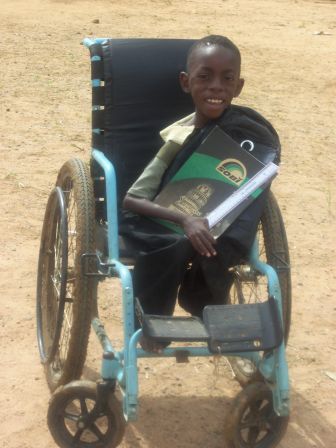
The organisation supports low vision, blind and the physically
challenged children. CHILDHOPE supports sensitization and
coordination activities at community and district level.
The organisation also supports the welfare of the physically
challenged children and distributes equipment. CHILDHOPE
supports health and nutrition of the children.
Child sponsorship programme
CHILDHOPE is running a child sponsorship programme for more
than 300 children in Mazabuka district in Magoye. Under
the sponsorship programme, the organisation pays school
fees for the children and supports health and nutrition
for the children on the programme. For the children that
is terminally ill, CHILDHOPE sponsors them for emergency
treatment. Also through the sponsorship programmes, families
are empowered with maize seed for planting to assist with
food security. Children are provided with chickens, goats,
clothes, schools, blankets, school requisites, bicycles,
mealie-meal, soya meal, cooking oil, sugar, salt, learning
materials, toys and many more other assorted good items
that could help improve life.
Where we work
CHILDHOPE works in a developing country called Zambia. It
focuses on reducing poverty and HIV/AIDS, improve the living
standards of children and promoting child rights in order
to raise them out of poverty.
• Vision Statement
The vision of CHILDHOPE is to see children that are free
from poverty, hunger with improved education system and
living standards.
• Our mission
The mission of CHILDHOPE is to reduce poverty and improve
the living standards of children in the rural areas of Zambia.